
Hiking the Tour du Mont Blanc Trail with Lactose Intolerance: Planning, Products and Pitfalls
A real challenge for anyone with dietary restrictions
I leave this Friday to hike the Tour du Mont Blanc. This kind of autonomous trail is a genuine challenge for lactose-intolerant people, but the problem extends well beyond lactose. Whether you are vegan, vegetarian, gluten-free, allergic to tree nuts, intolerant to FODMAPs, or managing coeliac disease, the underlying issue is the same: in remote areas, food options are limited, ingredient information is scarce or absent, and improvisation can have serious consequences.
A vegan facing a refuge menu built around cheese polenta and lard-based soup is in a comparable situation to mine standing in front of an unidentified creamy sauce. And for people with actual allergies (milk proteins, peanuts), the stakes are even higher: this is not a matter of digestive discomfort, it is an anaphylactic risk. They do not even have the option of "try it and deal with the consequences."
In France, lactose-free products are not always easy to find. I can only imagine that in the small village shops along the trail, the selection will be close to zero. As for meals served in mountain refuges and campsites, getting allergen information is already complicated in accessible places; in remote mountain huts, it will be even harder.
Planning meals: muesli, freeze-dried and chocolate
We are setting off with breakfast muesli and one freeze-dried meal per day. For the freeze-dried meals, brands like Turmat produce lactose-free options and their packaging clearly states the lactose-free status, which is a real advantage. Too many freeze-dried meal brands force you to squint at tiny ingredient lists on a crumpled pouch when you are exhausted at the end of the day.
For the muesli, I wanted something with more flavour. I found lactose-free baby milk powder: the adult versions either cost a fortune or are only available in bulk for food service professionals. One tablespoon (about 5 g per day) is enough for taste. I will report back on how it works out. If anyone knows a good online source for reasonably priced lactose-free milk powder in small quantities, I am all ears. There is a genuine gap in the market here.
For the chocolate in the muesli, I went with Callebaut dark chocolate 54.2% callets. Its composition contains no dairy products at all, and the callet format is perfect for portioning without carrying an entire block.
Energy bars also require careful attention. Nothing worse than getting sick in the middle of nowhere and having to stop too often. Many bars contain whey or milk powder without it being immediately obvious. It is worth building a verified stock at home rather than hoping to find safe options along the way.
The three-country advantage
The TMB crosses France, Italy and Switzerland, and that turns out to be an advantage. While France is the weakest link for lactose-free product availability in supermarkets, the Swiss and Italian sections of the trail tell a different story. Swiss AOP cheeses are overwhelmingly in the safe zone for lactose-intolerant people (categories A or B on the Lacto-Score scale). On the Italian side, aged local cheeses like Fontina Valle d'Aosta, Parmigiano Reggiano or Grana Padano are reliable choices. If you pass through Courmayeur, it is an opportunity to enjoy great cheese without risk.
Refuges: plan ahead
Most refuges serve evening meals built around soup, polenta, pasta, and often melted cheese or creamy sauces. The most practical approach is to contact the refuge in advance (many accept requests by email or phone when you book), eat your own freeze-dried meal on evenings where the menu is too risky, and keep lactase tablets for the occasions when you decide to try the refuge meal.
Lactase as a safety net
I am carrying highly dosed lactase tablets (13,000 FCC) for situations where I have no other choice. That is a solid backup dose. But the timing is critical: the enzyme must be present when the lactose reaches the small intestine, not three hours later when the damage is already done.
The app that reads any language
The real long-term strategy is prevention: verified freeze-dried meals, pre-screened energy bars, advance communication with refuges, and lactase as backup.
For the unknown products you will encounter along the way (local brands, packaging in Italian or German, products not referenced in Open Food Facts), the lactose.help app is a genuine safety net. The AI-powered image analysis feature understands all languages supported by large language models. You photograph the ingredient list and the nutritional table, and the app returns a Lacto-Score in seconds. When you are on holiday, far from your usual products and surrounded by unfamiliar brands, it is fast, easy, and it removes the guesswork.
This is exactly the scenario I experienced during my European dairy product tour in Prague, where most products were not yet in the database. Being able to snap a photo and get an instant analysis is what makes the difference between a confident purchase and a blind gamble.
The bottom line
The real prevention strategy boils down to this: prepare before you leave, scan what you do not know, and carry lactase for the rest. Whether you are lactose-intolerant, vegan, coeliac or allergic, the principle is the same: in remote areas, the margin for error shrinks. Preparation is everything.
I will share a full debrief after the trek: what worked, what did not, and whether the baby milk powder was worth it. Stay tuned.
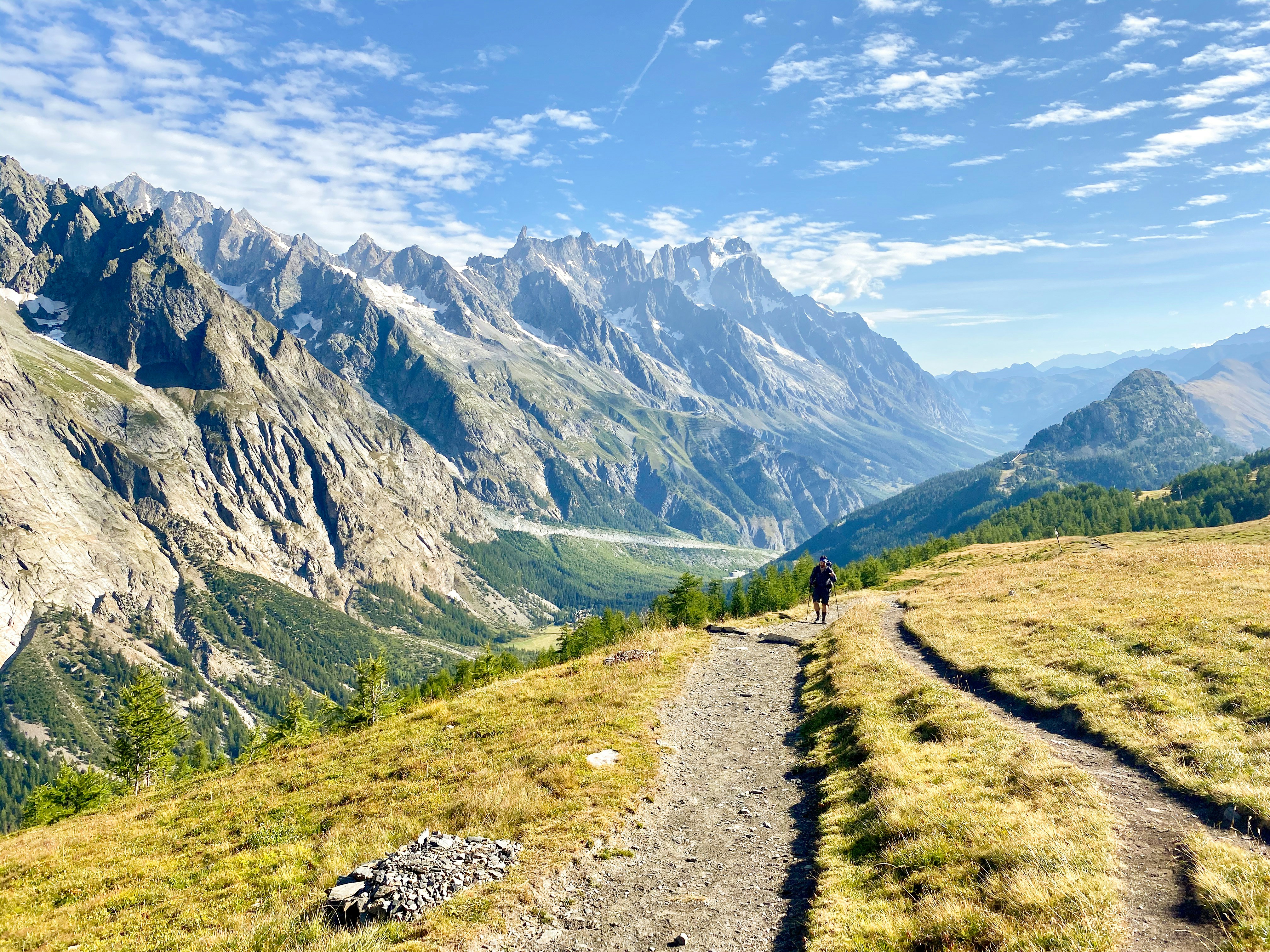
Photo by Ana Frantz on Unsplash