
Raclette, Fondue, Tartiflette, Mont d'Or : The Lactose-Intolerant's Winter Guide
Raclette, fondue, tartiflette, Mont d'Or without lactose?
Despite appearances, these great classics of winter evenings can absolutely be enjoyed by lactose-intolerant people, as long as you choose the right products. And believe me, we won't make a big deal out of it.
Raclette
For raclette, head straight to the top of the range: Raclette du Valais AOP. It's there, in that corner of Switzerland, that raclette was invented in the Middle Ages, and it's still there that it's made best. The advantage? Unlike the industrial versions found just about everywhere in supermarkets, Raclette du Valais AOP no longer contains lactose. Its extended aging process has done the work for you.
Fondue
Fondue is a whole family of dishes, and good news for lactose-intolerant people: depending on the cheeses chosen, it can go down without any problem. Take moitié-moitié, for example : a great Swiss classic made of equal parts Gruyère AOP and Vacherin Fribourgeois AOP. These two cheeses, properly aged, are naturally low in lactose. Reason enough to dip your bread without the slightest worry.
Tartiflette
Tartiflette is a dish that smells of mountain air and evenings when you have absolutely no desire to count calories. And the good news is that it's built around Reblochon, a naturally low-lactose cheese. Reason enough to go back for seconds without the slightest guilt.
Mont d'Or
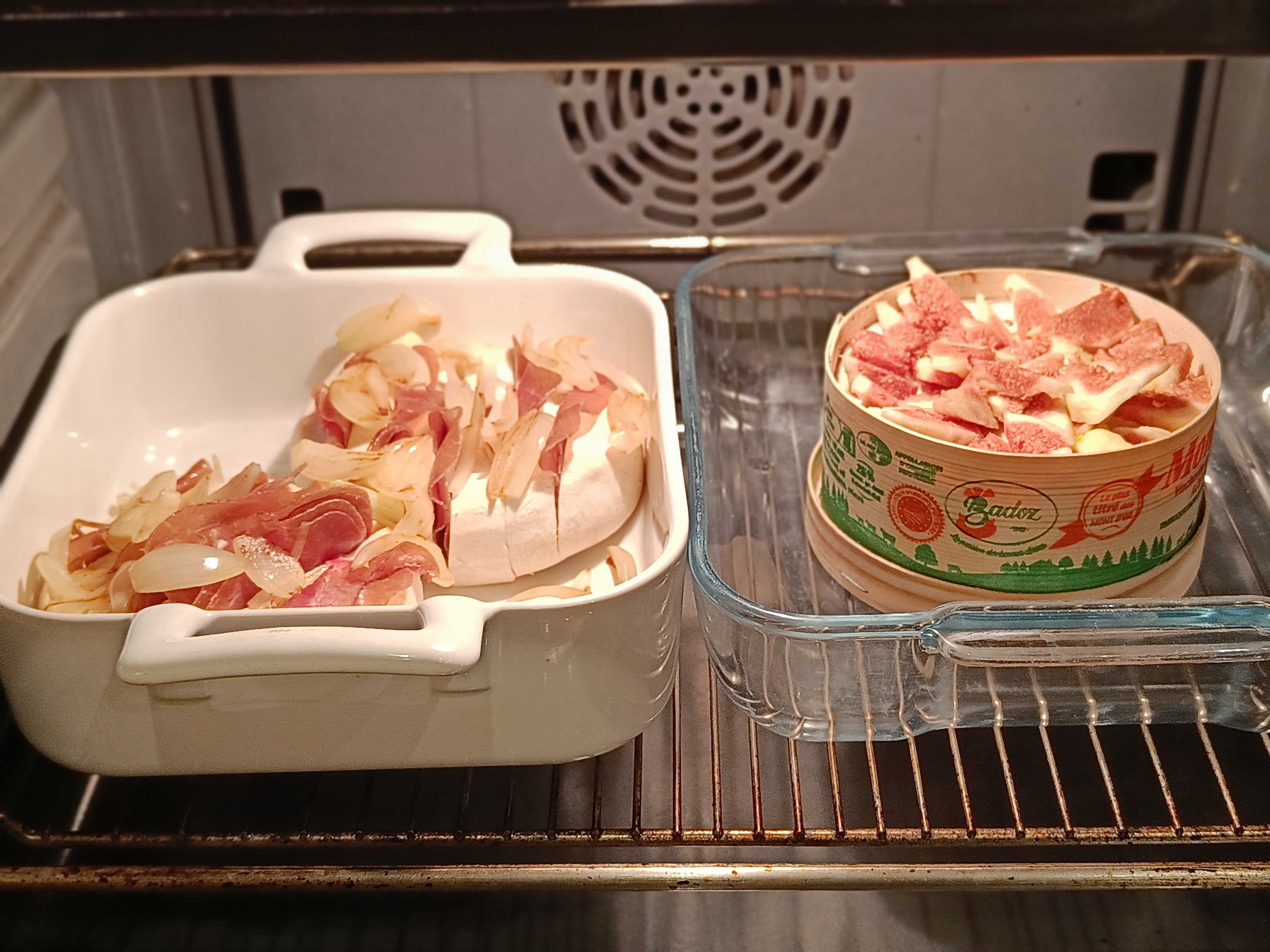
Mont d'Or comes in at 0.5g of lactose per 100g : placing it firmly in the camp of naturally low-lactose cheeses. And as with the others, the logic remains the same: it's not about banishing dairy from your life, but about staying below your own personal tolerance threshold.
According to an EFSA study, lactose-intolerant people can generally consume between 6 and 12g per day, spread across three meals. The most sensitive individuals experience symptoms from 3g onwards. But a dose of 1g per meal is compatible with all forms of intolerance.
Understanding the Lacto-Score (A–E)
To make results readable at a glance, we developed the Lacto-Score. A five-level scale, inspired by the Nutri-Score, to instantly identify whether a product suits you or not.
A – Safe. 0g of lactose per 100g. Completely lactose-free, safe for everyone. B – Generally safe. ≤0.5g of lactose per 100g. A tiny trace, perfectly tolerated in the vast majority of cases. C – Caution. ≤1g of lactose per 100g. Moderate content, to be consumed with care depending on your sensitivity. D – Risky. ≤1.5g of lactose per 100g. High lactose, likely to cause symptoms. E – High risk. >1.5g of lactose per 100g. To be avoided if you're intolerant, plain and simple.
And if the product is absent from our database, the app will let you know directly. A manual analysis of the ingredients is then necessary.
Additionally, a lactase dietary supplement, taken in the right amount and at the right time, can help with digestion.
The dishes mentioned above contain at most 0.5g of lactose per 100g of cheese. In other words, you can absolutely serve yourself a generous 200g portion and that, even without a lactase supplement.
BUT be careful: you must then apply the methodology described in the book or use the lactose.help mobile app.
All cheeses rated A or B are suitable for a portion of at least 200g. And that's still a conservative estimate!