
Lactose Intolerance: Symptoms, Variability, and Practical Solutions
Lactose intolerance is that awkward moment when your body categorically refuses to cooperate after a glass of milk or a piece of fresh cheese. For people who poorly digest lactose, the natural sugar in milk, the bill usually comes in the form of digestive symptoms... let's say, uncomfortable.
But the intensity varies enormously: some tolerate a cappuccino without flinching, others find themselves doubled over after three spoonfuls of yogurt. In short, it's a rather frustrating biological lottery.
Symptoms
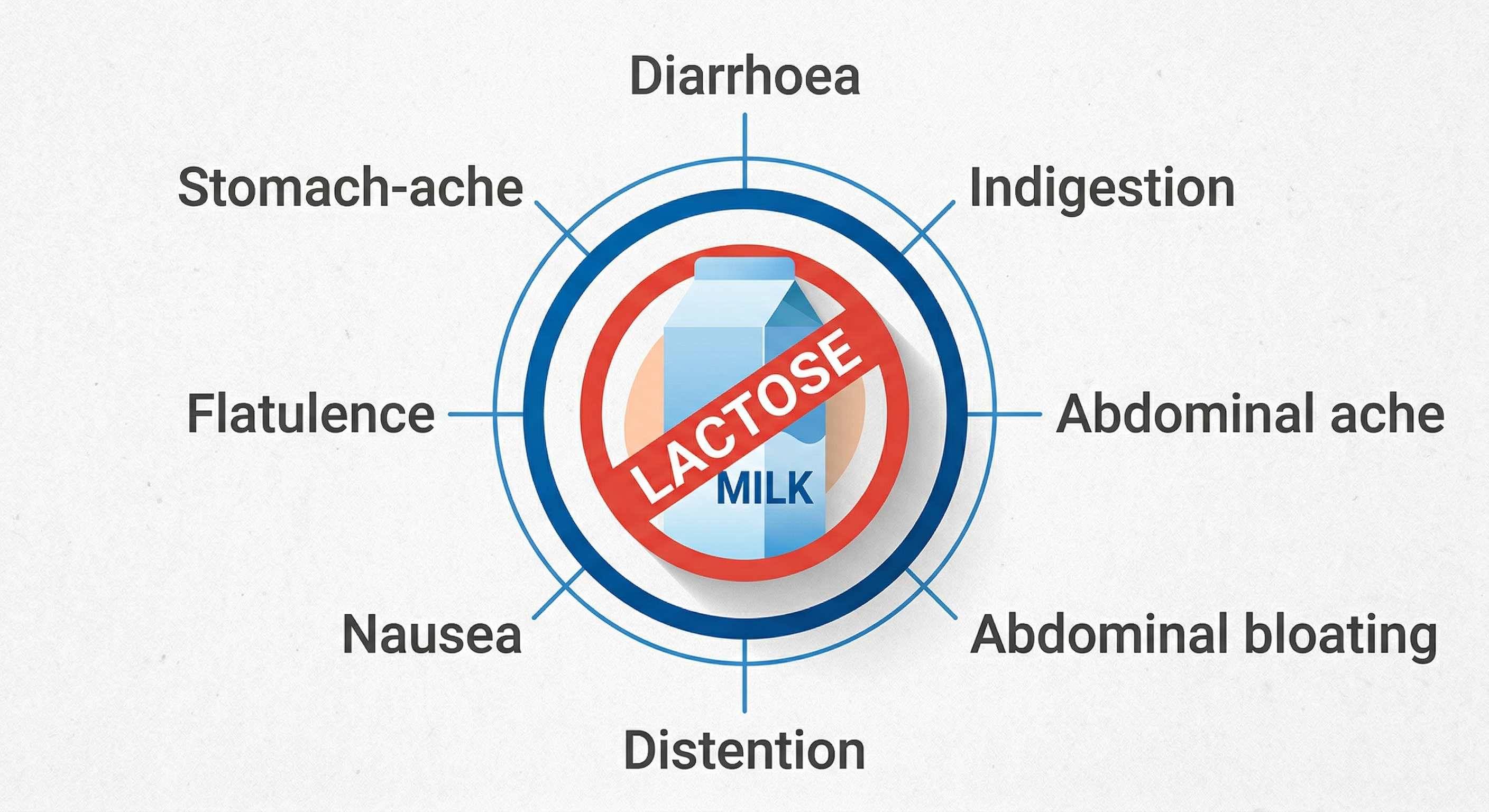
Researchers studying the issue all agree on an infernal quartet of symptoms:
Abdominal cramps: those diffuse pains that give you the impression that a mini-storm is rumbling in your belly
Bloating: that charming sensation of having swallowed a balloon, with abdominal distension as a bonus
Flatulence and borborygmi: free translation = your belly gurgles like faulty plumbing, and the air has to escape somewhere...
Diarrhea or loose stools: sometimes accompanied by that absolutely impractical urgency when you're in a meeting
More anecdotal but very real: nausea, vomiting in some people.
| Main digestive symptom | Frequency / comments |
|---|---|
| Abdominal pain/cramps | Very frequent |
| Bloating/distension | Very frequent |
| Flatulence/borborygmi | Very frequent |
| Diarrhea / loose stools | Frequent to very frequent |
Variability and frequent confusion
The real trap of lactose intolerance? It loves playing chameleon. Enormous numbers of people who technically malabsorb lactose, meaning their body digests it poorly, feel... absolutely nothing. Zero symptoms.
Conversely, others wrongly blame lactose when the real culprits are hiding elsewhere: gastric reflux, milk fats that slow digestion, genuine allergy to milk proteins (that's different!), or those famous FODMAPs, those fermentable sugars that wreak havoc in the sensitive intestine. Result: we demonize the cappuccino when it had nothing to do with it.
To be intolerant, you must malabsorb AND have symptoms.
When symptoms are truly related to lactose, they generally rear their head in a fairly predictable window: between thirty minutes and two hours after ingestion. That's the time it takes for undigested lactose to reach the colon and trigger that bacterial party you could have done without.
Conclusion
Here's where we stand: lactose intolerance is above all that not-so-pleasant digestive symphony: abdominal cramps, belly swollen like a balloon, embarrassing flatulence and express trips to the toilet. All that generally arrives in the hours following your glass of milk or bowl of vanilla ice cream.
Now, some people swear on their lives that they also experience persistent fatigue, throbbing headaches or brain fog after consuming lactose. Researchers remain cautious about these extra-digestive manifestations - let's say the scientific evidence isn't exactly overwhelming. Perhaps intestinal inflammation is causing remote trouble? Or maybe it's the digestive discomfort itself that mentally knocks you out. The debate continues.
What is certain: the intensity of your symptoms depends on an equation with several unknowns. The amount of lactose consumed obviously (a cloud of milk in coffee vs a bowl of cereal, it's not the same battle). But also the state of your intestinal flora, those billions of bacteria squatting in your colon and sovereignly deciding how to ferment that undigested lactose. And then there's your personal tolerance threshold, totally unpredictable: some handle a yogurt without flinching, others capitulate before a béchamel sauce.
In short, if you seriously suspect lactose is behind your recurring digestive discomforts, don't play amateur diagnostician for months. Medical advice remains the best option: if only to eliminate those other disorders that love disguising themselves as lactose intolerance (irritable bowel syndrome, milk protein allergy, celiac disease...). Because ultimately, missing the real culprit means unnecessarily depriving yourself of effective solutions.
Once the diagnosis is made, you can regain control through the mobile app lactose.help: it allows you to select lactose-free foods or foods with a concentration adapted to your personal tolerance threshold. No more anxiety-inducing guesswork in front of the dairy aisle.