
Lactose
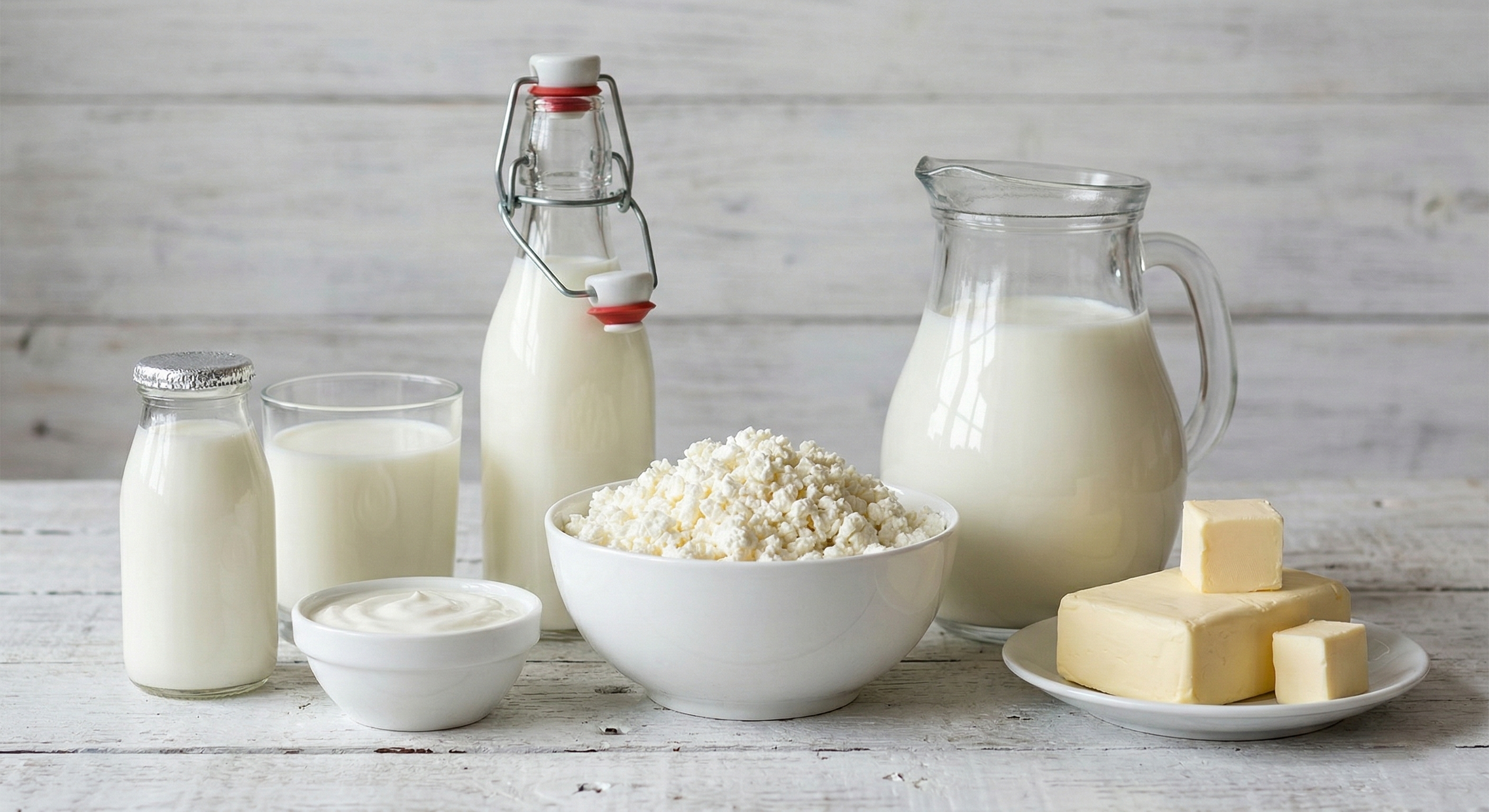
Lactose is the sugar naturally present in milk. To digest it, the intestine produces an enzyme called lactase, which breaks it down into two simpler molecules — galactose and glucose — that the body can then absorb without issue.
After weaning, lactase production naturally declines. And this is where things get complicated: around 70% of people worldwide become lactose intolerant at some point in their lives. The remaining 30% carry a genetic variant that maintains lactase production into adulthood, although some of them eventually lose it over time.
When lactase is lacking, lactose passes through the small intestine undigested and arrives intact in the colon. Gut bacteria take hold of it and ferment it, producing gases and acids, while drawing water into the intestine. This is precisely what causes the well-known symptoms: bloating, cramps, diarrhoea, nausea.
There is good news, though. A study by EFSA showed that most lactose-intolerant people can tolerate between 6 and 12 g of lactose per day, provided it is spread across several meals. The most sensitive individuals react from as little as 3 g, but a dose of 1 g per meal is generally well tolerated by almost everyone. That is enough to enjoy many naturally low-lactose foods — aged cheeses in particular. (We cover this in more detail in Cheese without lactose?)
Good news: we have developed a mobile app, lactose.help, that does all the work for you. It analyses the maximum lactose concentration of a product based on its ingredient list and nutritional composition. And using it couldn't be simpler: scan the barcode, and the result appears. That's it.
Lactase supplements are another option — and they work really well when used correctly. Their concentration is measured in FCC units, and the key is to take the right dose at the right time, based on how much lactose you are about to consume. Miss that timing, and you will feel it.
If you want to go deeper on the subject, we have written a comprehensive practical guide: Living Better with Lactose Intolerance, available on amazon.fr. The medical content has been reviewed by two registered dietitian-nutritionists. It explains how digestion works, how to spot hidden lactose on labels, how to determine your personal threshold, and even how to make your own lactose-free dairy products at home. It also includes a table of 140 cheeses ranked by lactose content — which is far more useful than it might seem, given that 76% of fine cheeses are actually accessible to most lactose-intolerant people.