
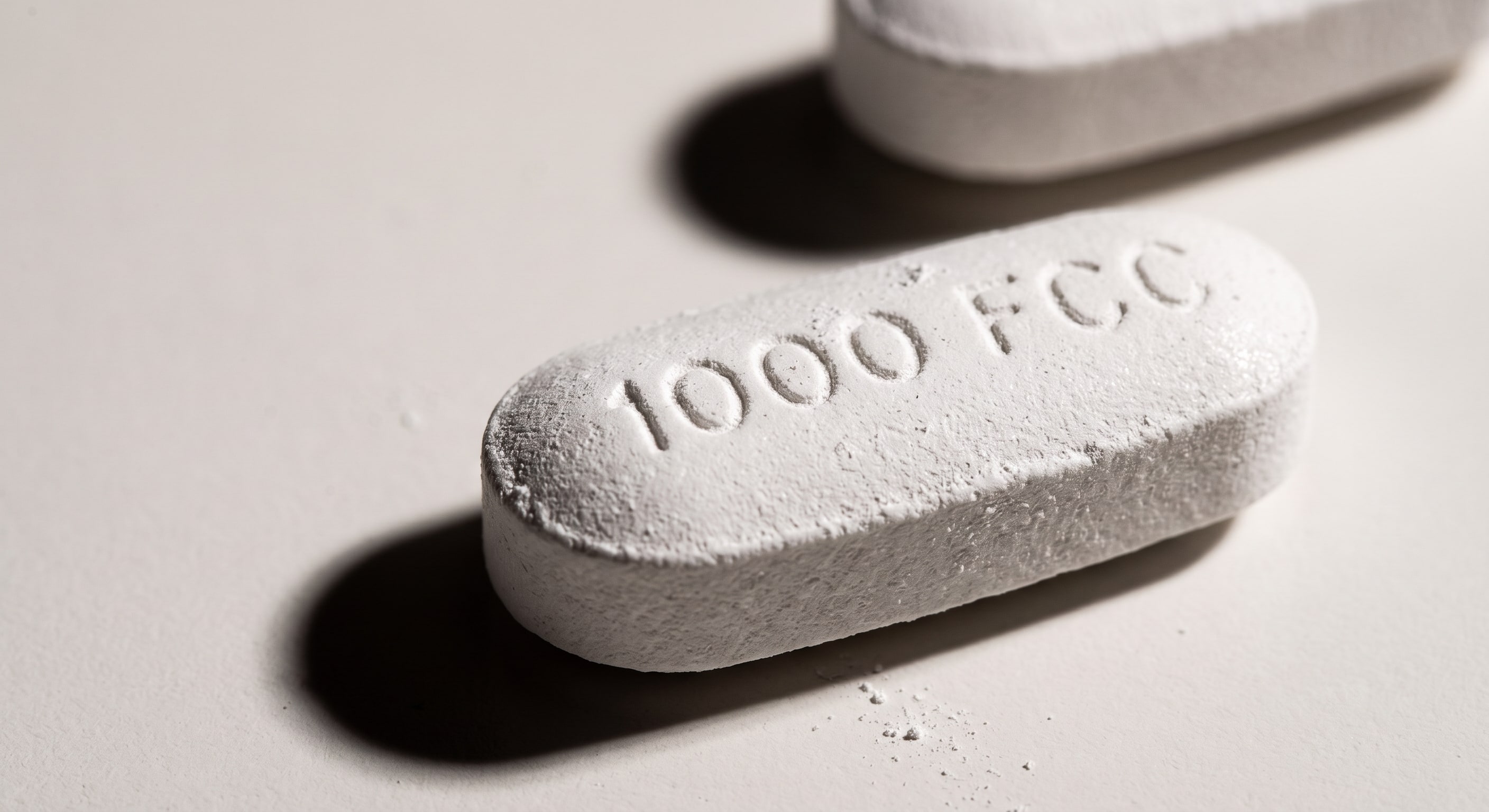
Are Your Lactase Capsules Really Effective?
How to Choose and Use Your Lactase Supplements Effectively (and Avoid Paying 10 Times Too Much)?
Do you suffer from lactose intolerance and feel like your capsules don’t always work? Or do you find your supplement budget getting out of control? Between underdosing, degradation by stomach acid, and price variations ranging from one to ten times, here is the complete guide to making the right choices.
1. Dosage: Why Is It Always Better to "Err on the Side of Excess"?
In theory, to digest a standard 200 ml glass of milk (which contains about 1 gram of lactose), specialists recommend supplying between 200 and 700 FCC units of lactase per gram of lactose.
However, at a restaurant or during a meal with friends, no one calculates the exact amount of lactose on their plate. When in doubt, apply this simple rule: better too much than too little.
- Overdosing is completely safe: An excess of lactase has no toxic or adverse effects. The surplus enzyme is simply naturally eliminated by the digestive system.
- Underdosing has no forgiveness: If the dose is insufficient, the undigested lactose reaches the colon and ferments, causing bloating, cramps, and digestive discomfort.
In practice: It is more convenient to buy highly dosed supplements (4,500 FCC for moderate intolerance, 9,000 FCC for severe intolerance), while respecting the maximum daily dose indicated by the manufacturer.
2. Timing of Intake: When Should You Take Your Capsule?
The moment you take your capsule is just as crucial as the dosage. Lactase is an enzyme that remains active only for 30 to 45 minutes in the digestive tract.
Take your supplement just before the first bite of the lactose-containing meal. If you take it too early (for example, 30 minutes before eating), the enzyme will have already lost much of its activity even before the meal reaches the stomach.
3. Gastric Protection: Why Do Some Brands Fail?
This is a point often overlooked: lactase is an acid-labile enzyme, which means it is very sensitive and easily destroyed by the hydrochloric acid present in the stomach.
According to tests measuring enzymatic activity:
- A non-gastro-resistant formulation can suffer up to 86% loss of activity in the stomach.
- A gastro-resistant formulation (enteric coating, microencapsulation, internal buffering) retains about 95% of its efficacy upon reaching the intestine.
💡 Expert tip: If a lactase brand does not work for you, don’t immediately conclude the enzyme is ineffective. It is very likely that its gastric protection is insufficient for your stomach acidity. Feel free to test several brands offering different release technologies.
4. Price Analysis: Are You Paying the Right Price for Your Lactase?
The lactase supplement market presents huge price disparities. Manufacturers often display attractive "per box" or "per capsule" prices, but these figures are misleading because dosages vary greatly from one product to another (from 2,000 FCC to 14,000+ FCC per tablet).
| Indicator | Market Price Observed | Analysis |
|---|---|---|
| Price per capsule | From €0.05 to €0.50 / capsule | Misleading (does not reflect the real enzyme quantity) |
| Actual cost per 1,000 FCC | From €0.0025 to €0.025 (and up to >€0.05) | Ratio of 1 to 10, even over 20! |
Some very economical brands (like Luto or large refill packs) offer a cost per 1,000 FCC around €0.0025, while premium brands or gadget formats (pocket dispensers, keychains) climb to over €0.025 or even €0.05 per 1,000 FCC.
To avoid wasting your money, always divide the box price by the total number of FCC units it contains!
In Summary: Your Anti-Intolerance Checklist
- Aim high: Prefer capsules with strong dosages (4,500 to 9,000 FCC).
- Be punctual: Take your capsule immediately before you start eating.
- Switch brands if needed: Look for gastro-resistant formulations if the effect remains modest.
- Calculate the real price: Always base your purchases on the cost per 1,000 FCC.